Our vibrant marine ecosystem here in WA means a range of marine life, including sharks, may be present at your chosen beach. Beachgoers are always encouraged to report a sighting of a shark to ensure necessary actions can be taken by the authorities to help keep other beachgoers safe.
These actions could include both clearing and/or closing a beach, as well as enabling authorities to share the information via a range of channels. This can include our Twitter feed (below) (@slswa) (opens in a new tab) or the State Government’s SharkSmart App. (opens in a new tab)


In fact, you can check out a great infographic of the WA Government’s integrated shark notification and response system (opens in a new tab) on the Sharksmart website.
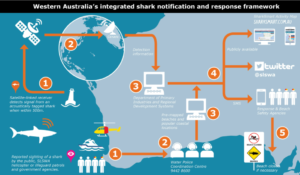
The system relies on two information sources – reported shark sightings made by members of the public or our surf lifesavers and lifeguards; and tagged shark detections from the Shark Monitoring Network.
Information from all reported sightings and tagged shark detections is automatically posted simultaneously to four platforms, so it is publicly available and sent to land managers and relevant authorities.
We always say that beach safety starts BEFORE we get to the beach, and this includes choosing which beach to visit that day based on the range of information available, including recent shark activity.
By reporting shark sightings, other beachgoers are assisted in making decisions that may impact their safety at the beach.
How do I report a sighting?
If you happen to spot a shark while you are at the beach you should report it as soon as possible to the Water Police on 9442 8600 – this number is staffed 24/7.
To ensure an effective response, be sure to provide the following:
- Date and time
- Location – be specific. Provide the beach or landmark name, closest suburb and distance from the shore. Even better, quote the BEN (Beach Emergency Number) (opens in a new tab)
- Shark species (if known) or distinguishing features
- Estimated size
- Your contact details for follow up if needed
Remember, the quicker you can make a report, the quicker the information can be shared with other beachgoers.
Where can I get further information?
If you’re interested in learning more about shark safety at the beach, check out the suggested links below:
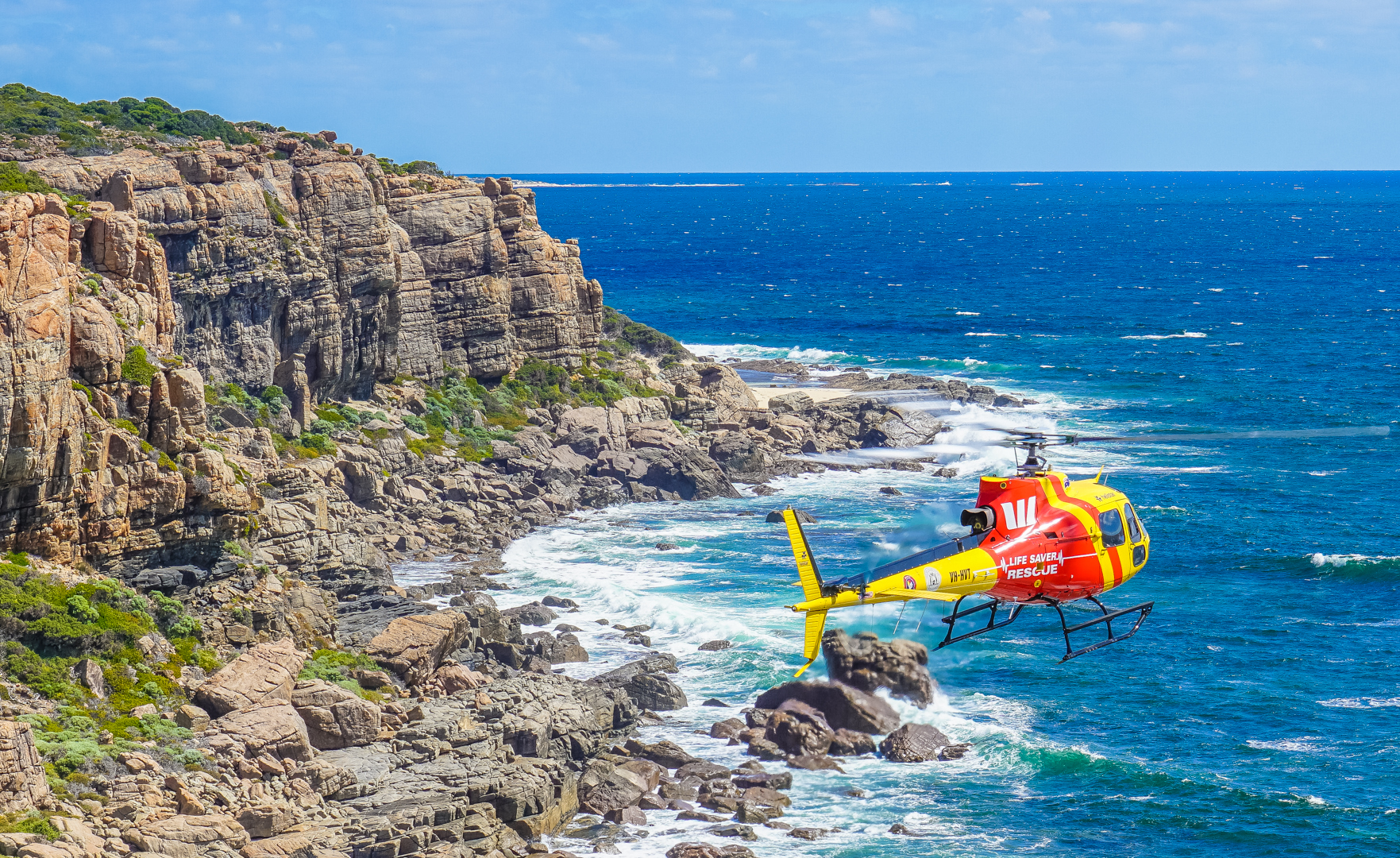
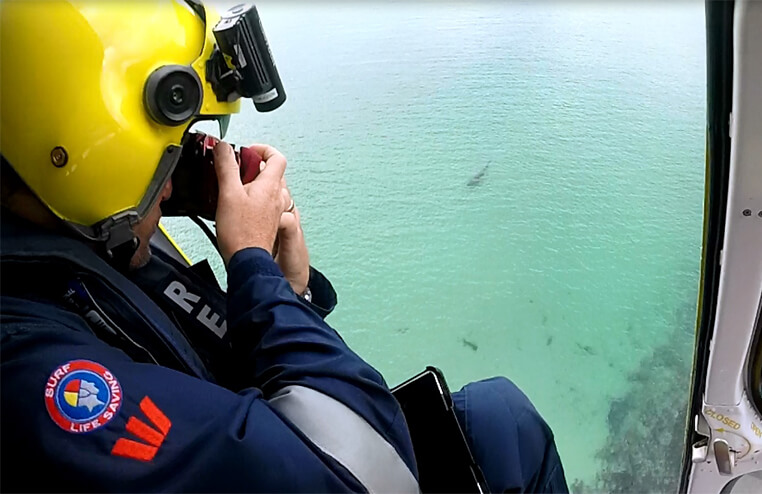
- Find out more about shark safety, including what to do if our Westpac Life Saver Rescue Heli spots a shark at the beach, here (opens in a new tab).
- Follow and check our Twitter account (opens in a new tab) before you go to the beach.
- Visit the SharkSmart website (opens in a new tab) to learn more about the State Government’s shark mitigation strategy. You can also download the SharkSmart WA app via the App Store (opens in a new tab) and Google Play (opens in a new tab). The SharkSmart WA app (opens in a new tab) provides useful location information to help make your shark sighting report. It combines shark activity information, beach safety features such as patrolled beaches and weather forecasts to help you plan your trip to the beach.
- Find out when your favourite beach is patrolled here. (opens in a new tab)